Subchapter 5.1
Machinery Regulation (EU) 2023/1230
The Machinery Regulation replaces the Machinery Directive 2006/42/EC as of 20th January 2027. What’s new and what remains as it is?
What is the Machinery Regulation?
The Machinery Regulation (EU) 2023/1230 is part of European legislation aiming at ensuring that machinery sold in the EU is safe to use and cyber-secure. It replaces the Machinery Directive 2006/42/EC which has been applied since the end of 2009.
Why the change? The Machinery Directive did no longer meet all aspects of the state of the art of machinery manufacturing. Computer technology and control systems have dramatically advanced since 2006 and many safety and security issues have come up that were unknown then. The introduction of AI into all fields of industry also made adaptation unavoidable. But when it comes to “classic” mechanical machinery safety, everything remains as it is.
Additionally, some general rules regarding CE-Marking and the roles of the “economic operators” involved in making and distributing machinery have been added to the Machinery Regulation. These had already been in force since 2008. This has resulted in apparent contradictions with the Machinery Directive, which are now resolved by the Machinery Regulation.
Finally, the Machinery Regulation also includes some refinements regarding contents of the declaration of conformity and the technical file.

Who is affected?
The Machinery Regulation applies to all relevant “economic operators*”, an artificial term referring to the players involved in placing machinery in the EU market:
Manufacturer
Authorised representative (of the manufacturer in the EU)
Importer into the EU (sometimes identical with the authorised representative)
Distributor
Upon each of these, the Machinery Regulation places specific tasks and requirements. For instance, an importer into the EU must ensure that the machinery is safe, conforms to the EU’s regulations, bears the CE Mark and is accompanied by the instructions in the correct language. The importer must also ensure, that the technical file which provides evidence that the machinery is in conformity is readily available for check-up by the authorities. This puts him almost on one level of responsibility with the manufacturer.
Distributors have less responsibility, but still must ensure the product is CE marked and accompanied by instructions in the correct language.
*The responsibilities of economic operators have originally been defined in 2008 in the regulation 765/2008/EC for CE Marking. It has been updated and extended in 2019 by the Regulation (EU) 2019/1020).
What is affected?
As the name itself says, the Machinery Regulation applies to machinery, but also to “related products”. The list of related products remained unchanged when compared to the Machinery Directive:
interchangeable equipment
safety components
lifting accessories
chains, ropes and webbing (for lifting and securing of loads)
removable mechanical transmission devices (for agricultural and construction machinery)
partly completed machinery
Some definitions have been extended, others refined. Notably, “safety components” now include mere software sold for the purpose of achieving a safety function.
Machinery includes several parts. One of these must be movable. Machinery either has a drive system other than muscle power, or it can be connected to a drive system. Thus, for instance, wind turbines are machines because their drive system is wind.
Partly completed machinery
A long-discussed specialty is “partly completed machinery”. It must meet both of the following criteria:
it cannot perform an application by itself alone AND
it is meant to be installed (integrated) into other machinery or systems, or connected to these
Partly completed machinery is not CE marked but accompanied by a declaration of incorporation and assembly instructions. The responsibility for the safety of the end result (complete machinery) must be borne by the integrator.
Another somewhat hidden addition to the scope is “substantially modified machinery” (mentioned in Article 18 but not in the Article 2 with the scope of the Machinery Regulation).
Why a regulation instead of an updated directive?
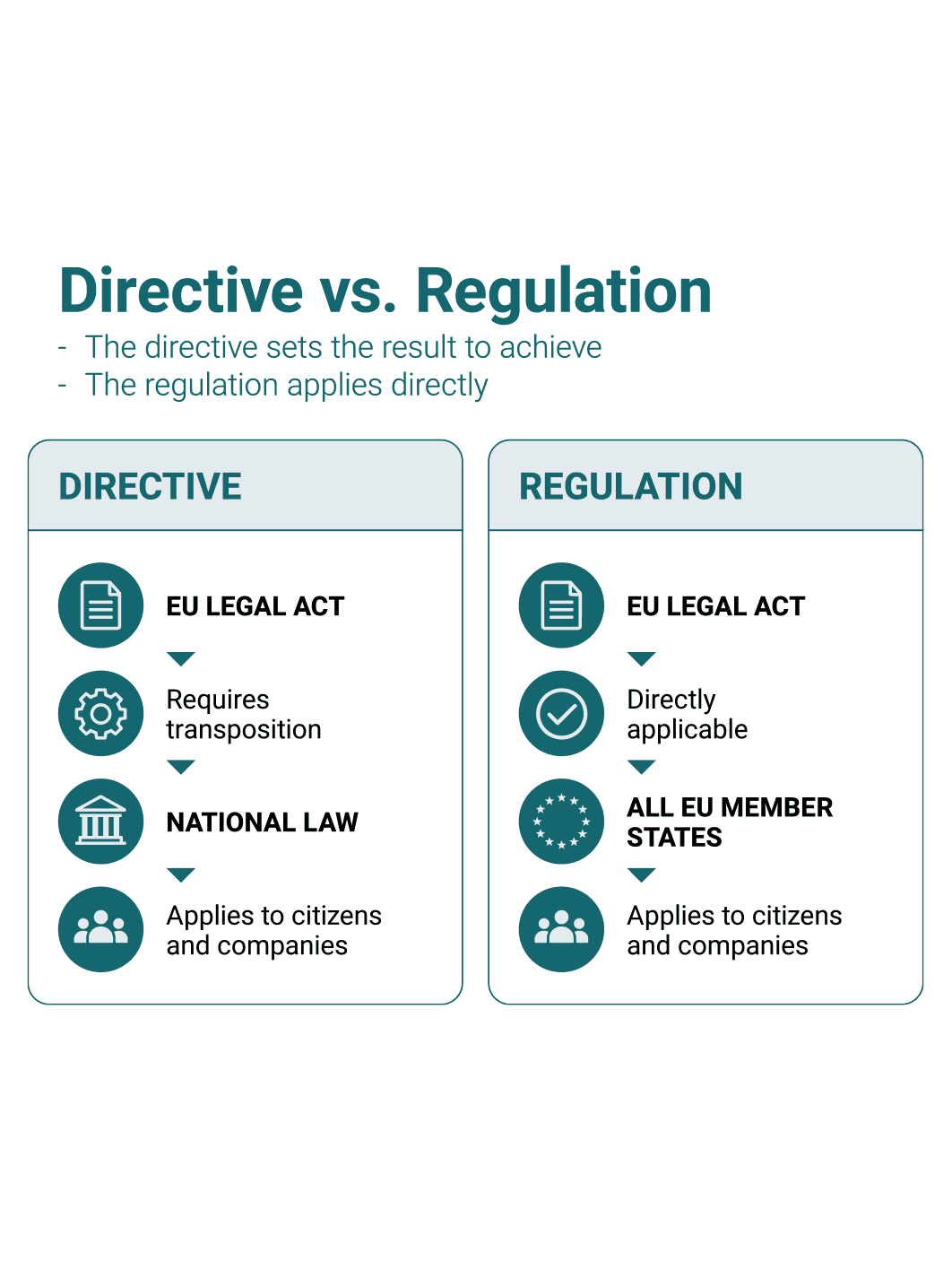
The most obvious change is in the title – formerly “directive”, now “regulation”. Why the difference? EU directives must be converted into national laws by each EU member state.
Then the EU commission must check, whether the community law has been implemented correctly. This is a time-consuming, tedious process. Also, it may be difficult for internationally active enterprises to find out which national laws implement a directive in the different countries and which additional rules must be observed in each country.
An EU regulation, however, applies directly in all member states from the date it enters into force. The structure and content are identical in each country and language. This makes it a lot easier for international players to apply the rules correctly. It also specifies directly the obligations of the national governments and authorities.
Start of application of the Machinery Regulation
When will the Machinery Regulation replace the Machinery Directive?
The Machinery Regulation 2023/1230 must be applied from 20 January 2027. Clauses of the Machinery Regulation that are stricter than those of the current Machinery Directive can be applied immediately by a machinery manufacturer. However, it will not be admissible to declare conformity with the Regulation before 20 January 2027. During a transition period some machinery manufacturers will likely refer to both the Machinery Directive and the Machinery Regulation as applicable to their products. More information about this can be found in the section “Harmonised standards and transition monitoring”.
Key changes introduced by the Machinery Regulation
The list of changes and additions is long, and it is important to study each aspect carefully to ensure one does not fail to apply the regulation correctly.
As a brief overview we offer the following (incomplete) list:
The obligations of the so called “economic operators” have been integrated as in all of the newer EU directives and regulations.
The scope now includes machines lacking control software and substantially modified machinery, considering modifiers as manufacturers with obligations under Article 10 (conformity declaration, assessment, and documentation).
The list of machines and related products requiring certification has been split into two sections and new products have been added. In the future, the EU Commission will have the right to update the list as needed.
The essential health and safety requirements have been updated. Most of the additions refer to artificial intelligence in safety related control systems, autonomous machinery, and protection against corruption of the machine’s safety system by deliberate actions (cyber-attacks).
The operating instructions for machinery may be supplied in electronic format (currently a version on paper is still considered mandatory).
Risk assessments must address additional risks from autonomous machinery, AI-based safety functions, cyber attacks, human-machine interaction, and integrated manufacturing systems.
For partly completed machinery, the contents of the assembly instructions have been defined in detail and no longer differ much from the requirements for the operating instructions for machinery.
Harmonised standards and transition monitoring
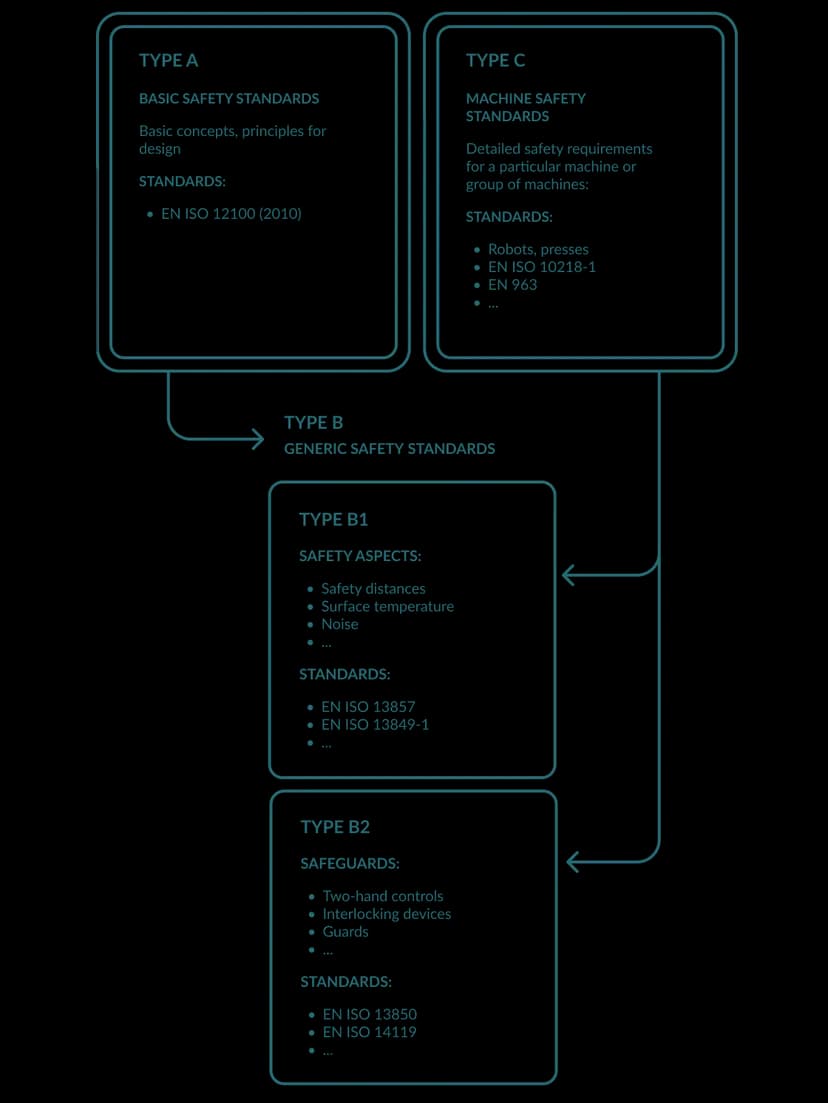
The Machinery Directive and the Machinery Regulation define safety and health requirements in generic terms that can be interpreted. Approved technical solutions and detailed requirements are described in hundreds of so called “harmonised standards”. They bring in “harmony” what has previously been defined in differing national standards.
For the Machinery Directive, the EU has long published a list of applicable harmonised standards. This list will be replaced by a new list for the Machinery Regulation. Currently it is not available yet. But it is very likely that most of the current safety standards (type B and C) that describe safety targets and safeguards will be taken over into the list.
A limited number of safety the standards (type A and B) are affected by the changes introduced by the Machinery Regulation and need to be revised. The revision process will not be completed before January 20, 2027.
Explore the latest standards and regulations on machine safety in this insightful webinar. Hosted by Order Planning Manager Atlanta Darroch-Davies and Safety Expert Matthias Schulz, gain expert knowledge to ensure compliance and enhance workplace safety. The webinar starts at the 2:00 minute mark.