Automated Warehouse Solutions
How the Benefits of Warehouse Automation Extend Beyond Simple Efficiency

Warehouse automation has transformed from a competitive advantage to a business necessity for distribution centers facing increased order volumes and tighter delivery timelines. As e-commerce continues to expand and labor challenges persist, automation technologies provide practical solutions for warehouses of all sizes.
The warehouse automation market reflects this shift, with projections showing growth to $51 billion by 2030. In addition, 80% of warehouse operators plan to increase automation investments in the next two to three years. These numbers highlight a clear trend: businesses are recognizing that automation delivers measurable improvements in efficiency, accuracy, and worker safety while addressing operational bottlenecks that traditional methods can't solve.
The following sections examine the key benefits warehouse automation offers and how these systems protect both people and investments.

What is Warehouse Automation?
Warehouse automation replaces manual, repetitive tasks with technology-driven systems that increase speed, accuracy, and reliability. It encompasses both digital solutions, like warehouse management software and inventory tracking systems, and physical technologies, such as autonomous robots, conveyor networks, and automated storage systems.
Most facilities adopt automation gradually, starting with basic digital tools before adding physical automation components. This phased approach allows warehouses to solve specific operational challenges while building toward more comprehensive systems that can handle picking, packing, inventory management, and order fulfillment with minimal human intervention.
Operational Efficiency Benefits
Streamlined workflows stand out among the primary advantages of warehouse automation systems. Automated picking sequences reduce travel time by plotting optimal paths. This optimization translates to substantial time savings for distribution centers processing numerous orders daily.
Tasks that once took hours—like receiving shipments and updating inventory—happen in minutes with automation. Well-designed solutions process orders continuously, eliminating bottlenecks common in manual operations.
Key operational improvements include:
- Faster order processing from receipt to shipment
- Consistent performance during peak periods
- Reduced walking time for warehouse staff
- Streamlined returns processing
- Improved lead times
Inventory management transforms with automation. Digital systems track every item with precision that manual methods cannot match. This accuracy prevents stockouts while reducing surplus inventory.
Error rates drop significantly in automated warehouses. Barcode scanning catches mistakes that human eyes miss. Real-time visibility becomes the norm, allowing staff to make timely decisions that keep products moving efficiently through the supply chain.
Economic and Cost Benefits
The financial benefits of automating warehouse operations stretch far past the setup phase. Though starting costs might appear significant, ongoing savings over time build an impressive business justification for the investment.
Labor costs typically represent the largest warehouse expense. Automated systems optimize staffing by handling repetitive tasks, allowing workers to focus on complex problems. This shift transforms roles into higher-value positions supporting the automated infrastructure.
Economic benefits include:
Workforce and Safety Benefits
Working in warehouses presents real physical challenges. Staff often strain their bodies lifting heavy items, performing the same movements repeatedly, and weaving through crowded pathways filled with moving equipment—all situations where injuries commonly occur. Automation dramatically reduces these hazards by removing workers from dangerous situations.
- Safety improvements through automation include:
- Fewer back injuries from manual lifting and carrying
- Reduced forklift accidents in high-traffic areas
- Elimination of climbing risks for high-shelf inventory
- Decreased repetitive motion injuries
- Safer handling of hazardous materials
Beyond physical safety, automation transforms warehouse roles into more engaging positions. Staff members shift from repetitive tasks to operating sophisticated systems, problem-solving, and oversight roles. This elevation in job responsibilities often leads to higher job satisfaction and better employee retention in an industry known for high turnover.
Workers develop valuable technical skills by interacting with automated systems. These skills—from software operation to equipment maintenance—increase employability and create advancement opportunities. The most successful warehouses treat automation as a worker-enhancement tool rather than a replacement, creating collaborative environments where human judgment and machine efficiency complement each other.

Technology Integration Benefits
Modern warehouse automation relies on seamless technology integration. Well-designed systems connect with existing warehouse management software, creating a unified information ecosystem were data flows automatically between systems.
This connectivity offers several advantages:
- Elimination of duplicate data entry between platforms
- Consistent information across all warehouse functions
- Automated report generation for management review
- Real-time updates to inventory and order status
- Simplified audit trails for regulatory compliance
Data-driven decision making becomes possible with integrated automation. Managers access dashboards showing performance metrics across all warehouse operations, identifying bottlenecks before they cause problems. This visibility allows for continuous process improvement based on actual operational data rather than assumptions.
Predictive maintenance capabilities represent another significant benefit. Automated systems monitor their own performance, alerting maintenance teams before breakdowns occur. This proactive approach reduces unexpected downtime and extends equipment lifespan, protecting the automation investment.
Properly integrated systems may also improve scalability. Warehouses can expand operations during peak seasons without proportional increases in staff or errors, maintaining service levels during the most challenging periods.
Types of Warehouse Automation Systems

Autonomous Mobile Robots (AMRs)
These intelligent machines navigate freely throughout facilities using advanced sensors and cameras, adapting to changing environments without fixed pathways. AMRs excel in dynamic warehouses where layouts change frequently.

Automated Guided Vehicles (AGVs)
Following predetermined routes using floor markers or magnetic strips, AGVs handle predictable transport tasks between fixed points. They work well in warehouses with stable layouts and repetitive material movement needs.

AS/RS and Pallet Shuttle Systems
These high-density storage solutions maximize vertical space using automated carriers that move along rails within racking. They significantly increase storage capacity while reducing aisle requirements.

Conveyor and Sortation System
Creating reliable pathways for product movement, these systems connect different warehouse zones and automatically direct items to appropriate destinations based on barcode scans or RFID readings.

Robotic Picking Solutions
Equipped with advanced grippers and vision systems, these robots select items from bins and prepare them for shipping. They handle small to medium-sized products with increasing dexterity.

Autonomous Forklifts
Self-driving lift trucks handle vertical movement of palletized goods without operator intervention. They navigate using technologies similar to AMRs while incorporating lifting capabilities for storage and retrieval operations.
Implementation Considerations and Best Practices
Successful warehouse automation begins with a thorough assessment. Evaluating current operations identifies specific pain points where automation delivers the greatest impact. Start by mapping existing processes, measuring productivity, and identifying bottlenecks before selecting technologies.
A methodical implementation approach typically includes:
- Needs Assessment: Document current workflows, strengths, and weaknesses to establish clear objectives for automation.
- Start Small: Begin with targeted solutions addressing high-impact areas rather than attempting complete warehouse transformation at once.
- Pilot Programs: Test technologies in limited areas to resolve integration issues before full-scale deployment.
- Data Integration: Ensure new systems communicate effectively with existing warehouse management software.
- Staff Involvement: Include warehouse workers in planning and implementation to gain valuable insights and reduce resistance.
Change management deserves special attention during automation implementation. Staff may worry about job security or struggle with new technologies. Clear communication about how automation enhances rather than replaces human roles helps ease these concerns.
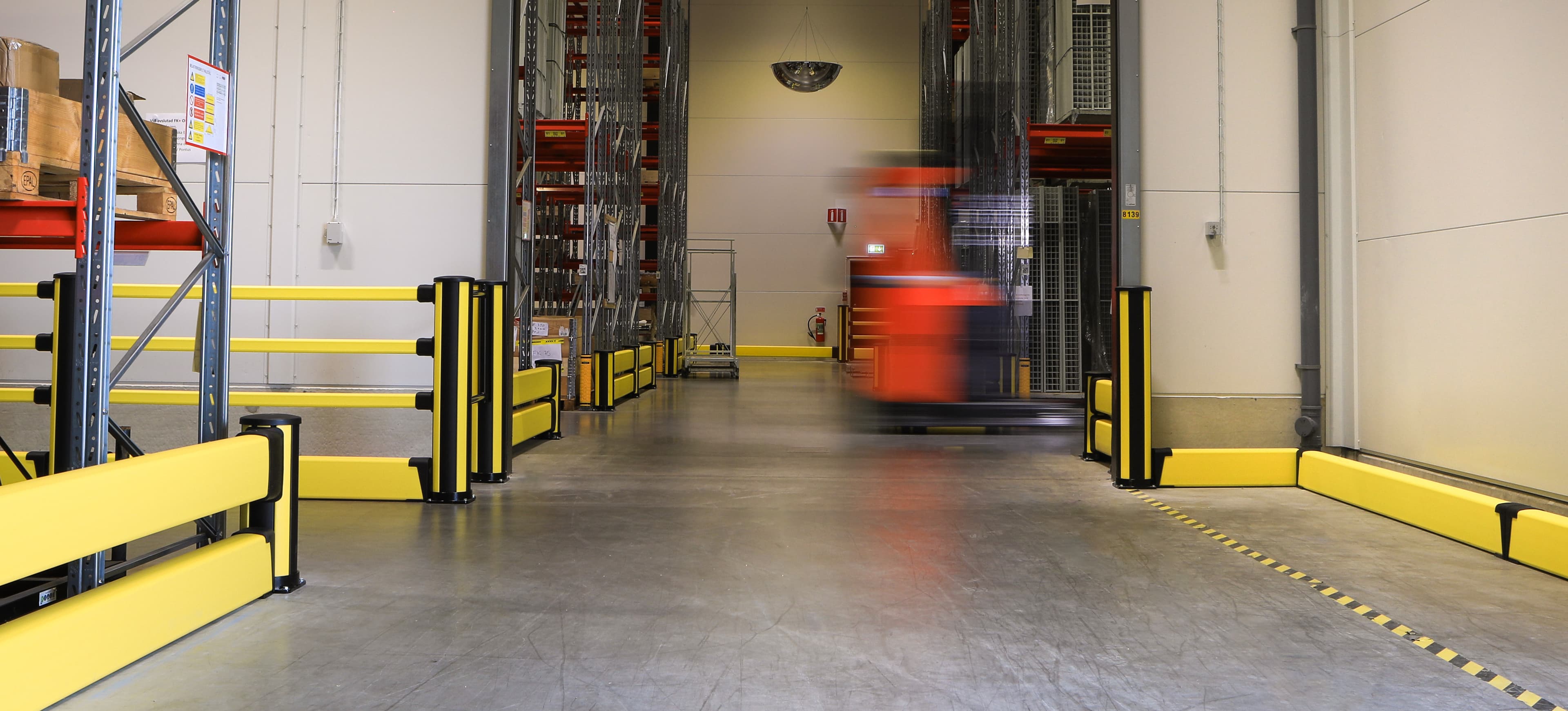
Physical protection systems should be planned alongside the automation technology itself. Safety barriers around robotic zones, clearly marked pedestrian walkways, and impact protection for vulnerable infrastructure all contribute to successful implementation. These protective elements prevent costly damage to both equipment and personnel.
Protection and Safety Requirements
Safety barriers and guards matter tremendously in warehouses with automated equipment. When protection systems aren't in place, something as simple as a small bump between a robot and a rack can shut down operations and lead to expensive repairs.
Essential protection components include:

Impact Barriers
Create defined pathways for automated equipment, protecting storage racks and infrastructure from collision damage during routine operations.

Pedestrian Barriers
Establish dedicated walkways that keep people safely separated from automated vehicle routes and robotic work zones.

Floor Barriers
Provide ground-level impact protection around building perimeters and vulnerable infrastructure that could be damaged by autonomous vehicles.

Bollards
Shield critical equipment, doorways, and exposed corners from collision damage while visually guiding automated transport systems through the facility.

Column Guards
Protect structural building supports from impacts in high-traffic areas where automated vehicles operate, preventing costly structural damage.
Safety barriers not only protect personnel but also safeguard substantial automation investments. The cost of repairing or replacing damaged automation equipment far exceeds the investment in proper protective systems.
In many jurisdictions, regulatory compliance requires physical separation between automated systems and workers. OSHA and ANSI guidelines specify safety requirements for automated equipment, making proper protection systems a legal necessity.

Securing Warehouse Automation with X-Protect
At Axelent, we've specialized in creating safer workplaces through innovative protection systems since 1990. With manufacturing headquartered in Sweden and a global presence in 60 countries, we bring extensive safety expertise to warehouse automation challenges.
Our X-Protect product line offers comprehensive impact protection solutions designed specifically for modern automated warehouses. These solutions help facilities protect both their automation investments and personnel through:
- Modular Design: Components can be replaced individually when damaged, minimizing downtime and maintenance costs
- Easy Installation: Systems require minimal tools and time to set up, reducing implementation disruption
- Adaptable Configuration: Barriers reconfigure easily as warehouse layouts evolve with changing automation needs
- Impact Resistance: Products are tested extensively to withstand collisions from warehouse vehicles
- Regulatory Compliance: Solutions help meet OSHA and ANSI safety guidelines for automated environments
- Resource Efficiency: Protection systems preserve equipment and reduce waste from premature replacements
The X-Protect system integrates seamlessly with automated equipment while establishing clear boundaries between robotic operations and personnel areas. Our customers particularly value how our protection systems grow alongside their automation investments, providing consistent safety as operations expand.
We understand that protecting automation infrastructure is essential to maintaining operational efficiency. That's why we've designed our products to be as adaptable and resilient as the automated systems they protect.
Frequently Asked Questions
Related articles

Safety that keeps the flow running in automated cold storage
In Kuurne, Belgium, Coldo operates a highly automated freezer warehouse reaching nearly fifty metres in height. For Ceratec, responsible for delivering the automation solution, the challenge was clear: how to ensure safety, accessibility and maintenance without interrupting the flow. In this customer case, we explore how safe access, zone separation and modular safety solutions make it possible to carry out maintenance without shutting down the system.

Stainless Steel Machine Guarding for High Hygiene Environments
In food processing, pharmaceutical manufacturing and washdown environments, machine guarding must support cleaning, resist corrosion and fit into strict hygiene routines. Standard guarding is not always built for these demands. Moisture, cleaning agents and hard to reach surfaces increase maintenance time and put compliance at risk. Through NTF, Axelent offers stainless steel machine guarding built for these environments.

Column Protectors for Warehouses: Shield your building from forklift damage
Forklift impacts rarely stop at the point of contact. A damaged column, cracked wall or frequently hit corner can lead to repairs, downtime and long-term structural wear across the facility. Column protectors for warehouses reduce that risk by protecting the structural assets exposed to daily vehicle traffic.

Pallet Racking Protection: Prevent forklift damage to uprights and aisle ends
Every forklift impact against a rack upright creates damage that spreads beyond the point of contact. One bent upright lead to inspections, repairs, downtime and reduced load-bearing integrity. Repeated impacts shorten the lifespan of the entire racking system. Pallet racking protection reduces that risk by protecting the areas where collisions happen most often: uprights, aisle ends and exposed traffic zones.

Warehouse Barrier Systems: Choose the Right Protection for Every Zone
Every unprotected zone in a warehouse is a problem that hasn't happened yet. This guide helps you choose the right barrier system for each area in your facility, from high-traffic forklift routes to loading docks and pedestrian crossings.

How Much Does It Cost to Automate a Warehouse?
Modern businesses investing in warehouse automation can benefit from enhanced operational efficiency, reduced labor costs, and improved accuracy in fulfillment operations.