Logistics & Manufacturing
How to create a safe warehouse that supports long-term efficiency

Start with the people
Many warehouse incidents can be traced back to human factors such as unclear traffic rules, improper load handling or unreported rack damage. Even minor impacts can weaken the racking structure if they are not identified and addressed in time.
To reduce these risks, training must be continuous rather than occasional. Clear routines and regular follow-up ensure that risks are identified and addressed before they lead to incidents.
Employees must understand:
- Forklift operation and internal traffic rules
- Safe loading and unloading procedures
- How to identify and report rack damage or near misses
- Correct use of protective equipment
Design forklift aisles for safe and efficient traffic flow
Forklift collisions are one of the most common causes of rack damage in warehouses. Narrow aisles, unclear traffic routes or insufficient turning space increase the risk of impacts, damaged uprights and falling goods.
Aisle width and layout must be calculated based on actual operating conditions, not estimates. Aisles should be dimensioned according to:
- The forklift model and turning radius
- Pallet dimensions and overhang
- Lifting height and load weight
- Traffic frequency and flow
Invest in high-quality pallet racking systems
Structural rack failures are often the result of overloaded beams, damaged uprights or incorrectly specified systems that do not match actual load conditions.
To prevent deformation and collapse, the racking system must be specified and installed based on:
- Verified load capacity requirements
- Actual pallet type and weight distribution
- Correct beam length and upright profile
- Proper anchoring and floor conditions
Strengthen protection with the right equipment
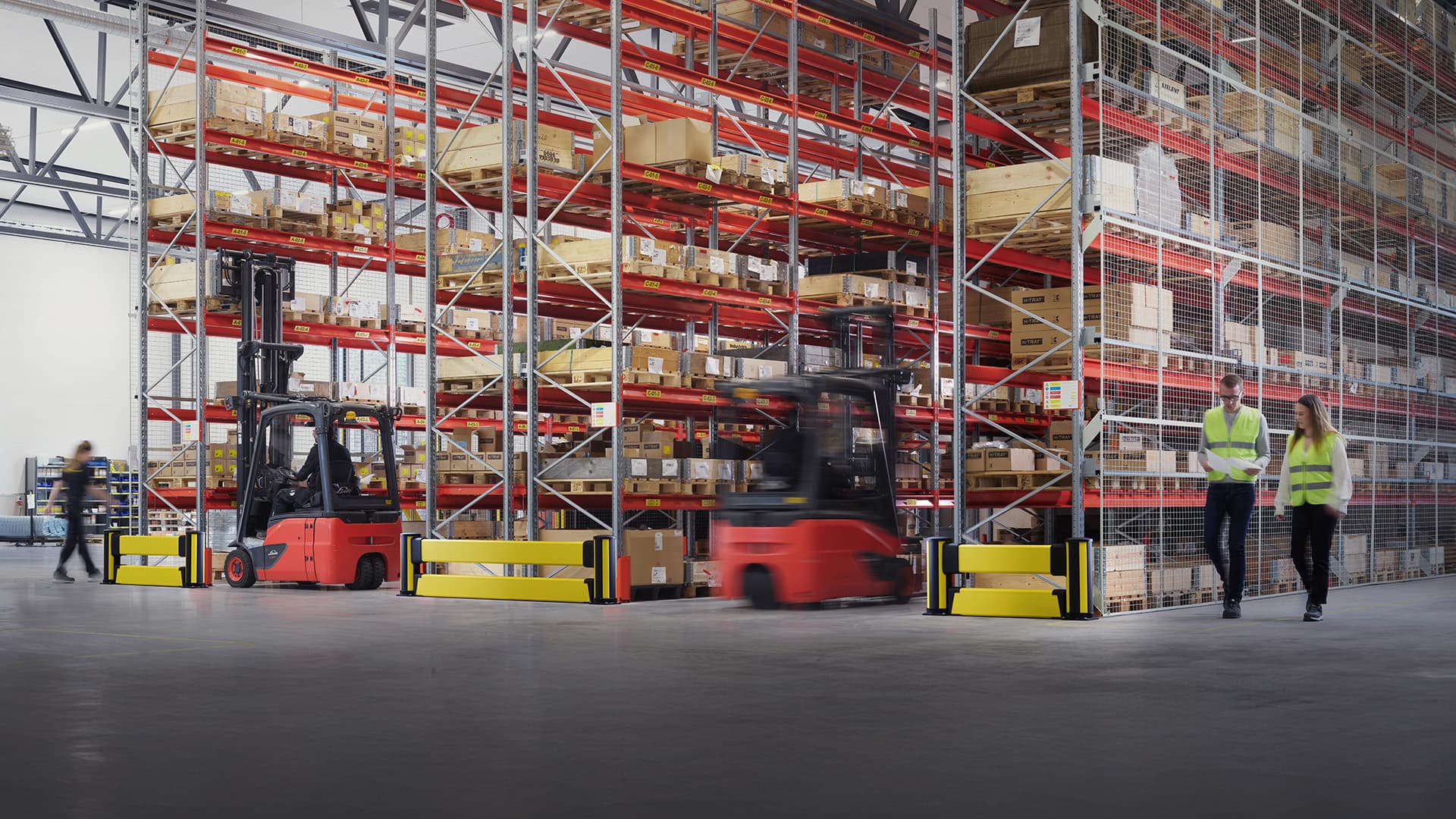
Forklift impacts frequently occur at aisle ends, intersections and loading zones. Without physical protection, repeated impacts weaken load-bearing structures and increase the risk of structural failure.
Preventive protection systems should be installed in high-risk areas, including:
- Column guards to absorb direct impacts to uprights
- Impact protection barriers in high-traffic zones
- Anti-collapse protection to prevent goods from falling into pedestrian areas
- Mesh shelves to reduce the risk of small items dropping through
Build a warehouse that evolves with your business
Increased volumes, automation or changes in product dimensions alter load patterns, traffic flow and storage density. When layouts change without reassessing load capacity and protection systems, structural and operational risks increase.
Whenever operations evolve, review:
- Load capacity calculations
- Aisle width and turning space
- Rack protection systems and anchoring
- Traffic flow and pedestrian separation
Create a safer, more compliant workplace
With decades of experience and solutions that meet the highest safety standards, Axelent specializes in protecting your people, equipment, and operations. Let our safety specialists help you create a safer, more efficient workplace.
Related articles

Data Centre Physical Security
Create secure data centre environments with modular server cages, partitions and secure zones designed to support access, airflow, maintenance and future changes.

Machinery Directive vs Machinery Regulation: What Changes and What Continues?
Understand the key differences between the Machinery Directive and Machinery Regulation (EU) 2023/1230, including what changes and what remains.

What Machine Manufacturers Need to Know About the Machinery Regulation
From 20 January 2027 the EU Machinery Regulation (EU) 2023/1230 will apply, replacing the current Machinery Directive 2006/42/EC. For machine manufacturers, the change affects several areas of machinery compliance, including risk assessment, technical documentation, cybersecurity and the Declaration of Conformity.

Safety that keeps the flow running in automated cold storage
In Kuurne, Belgium, Coldo operates a highly automated freezer warehouse reaching nearly fifty metres in height. For Ceratec, responsible for delivering the automation solution, the challenge was clear: how to ensure safety, accessibility and maintenance without interrupting the flow. In this customer case, we explore how safe access, zone separation and modular safety solutions make it possible to carry out maintenance without shutting down the system.

Stainless Steel Machine Guarding for High Hygiene Environments
In food processing, pharmaceutical manufacturing and washdown environments, machine guarding must support cleaning, resist corrosion and fit into strict hygiene routines. Standard guarding is not always built for these demands. Moisture, cleaning agents and hard to reach surfaces increase maintenance time and put compliance at risk. Through NTF, Axelent offers stainless steel machine guarding built for these environments.

OSHA Guardrail Requirements: Workplace Safety Standards
Workplace falls are a leading cause of fatalities in construction and industrial settings. OSHA's guardrail requirements address these hazards through specific standards that dictate height, strength, materials, and installation methods for fall protection systems.