Subchapter 5.4
High-risk machinery certification
Since the beginning of CE Marking machines considered particularly hazardous because of their accident history could only be introduced to the market after approval by a so called “notified body”. In its Annex IV, the Machinery Directive listed 23 categories of machinery requiring certification. With the Machinery Regulation the list has been split in two, and certification is required for only six machine types now.
Machines requiring approval by a “notified body” (Annex I A)
Annex I A of the Machinery Regulation lists the following six “Categories of machinery or related products to which a procedure referred to in Article 25(2) shall be applied“:
*Notified bodies are EU-authorized testing labs that carry out the certification of machinery. These are located inside and outside the EU. For a list go to the official website of the EU.
Machinery requiring application of a type C standard (Annex I B)
All other categories of machinery previously listed in Annex IV of the Machinery Directive are now found in Annex I B. For these, a formal certification procedure involving a notified body is no longer required. The manufacturer must make them in accordance with an applicable type C standard, which must be listed in the Official Journal of the EU. Currently there is no list of standards for the Machinery Regulation, but the first version is expected to be published in December 2026. The standard must be referred to in the Declaration of Conformity (DOC).
Here is an abbreviated list of the machinery requiring this type of reference:
Various types of circular saws
Hand-fed surface planing machinery for woodworking
Thicknessers for one-side dressing having a built-in mechanical feed device, with manual loading and/or unloading for woodworking.
Various types of band-saws with manual loading and/or unloading for working with wood and material with similar physical characteristics or for working with meat and material with similar physical characteristics
Combined machinery of the types referred to in points 1 to 4 and in point 7 for working with wood and material with similar physical characteristics.
Hand-fed tenoning machinery with several tool holders for woodworking.
Hand-fed vertical spindle moulding machinery for working with wood and material with similar physical characteristics.
Portable chainsaws for woodworking.
Presses, including press-brakes, for the cold working of metals, with manual loading and/or unloading, whose movable working parts may have a travel exceeding 6 mm and a speed exceeding 30 mm/s.
Injection or compression plastics-moulding machinery with manual loading or unloading.
Injection or compression rubber-moulding machinery with manual loading or unloading.
Various machinery for underground working
Manually loaded trucks for the collection of household refuse incorporating a compression mechanism.
Devices for the lifting of persons or of persons and goods involving a hazard of falling from a vertical height of more than 3 m.
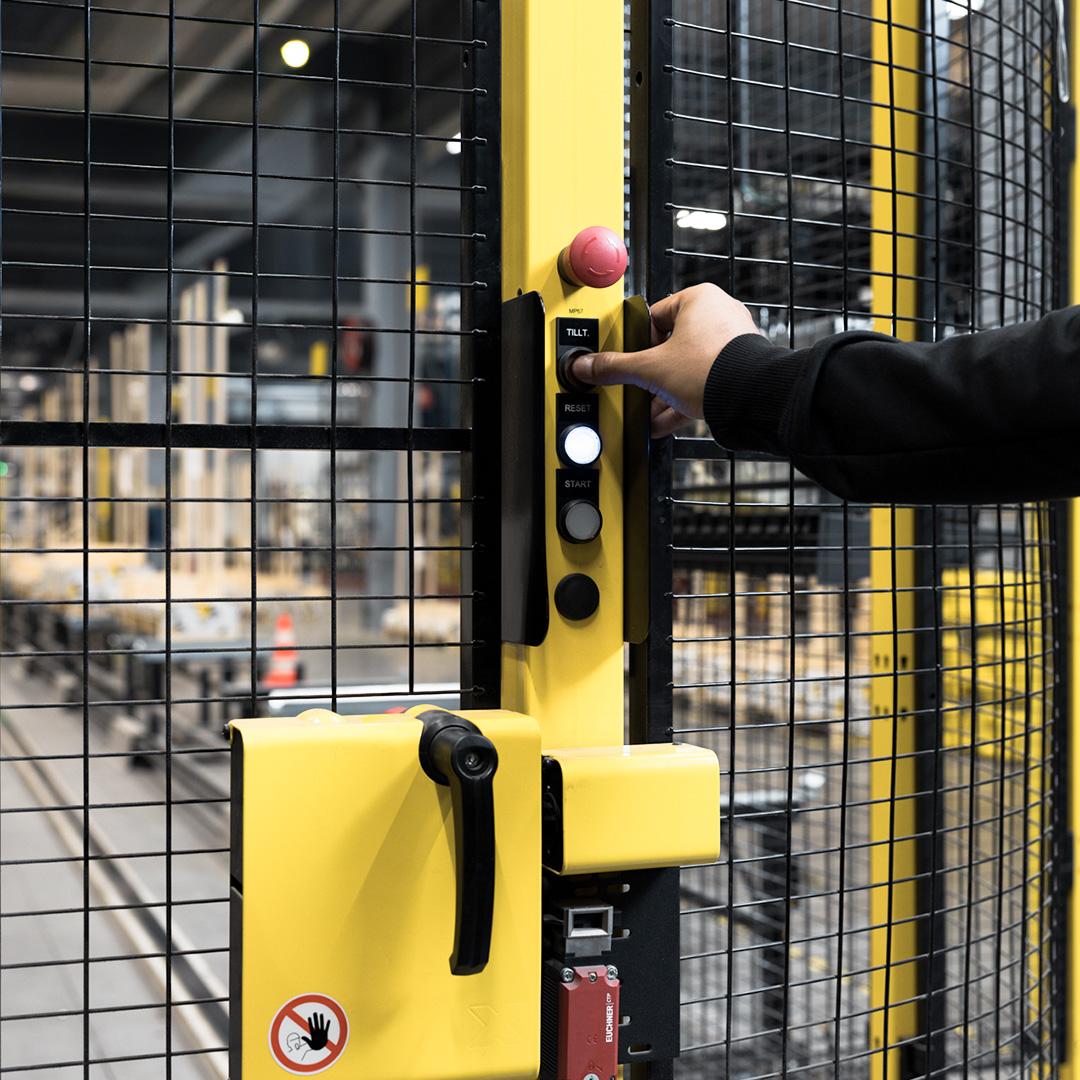
Protective devices designed to detect the presence of persons.
Power-operated interlocking movable guards designed to be used as safeguards in machinery referred to in points 9, 10 and 11 of this Part.
Logic units to ensure safety functions.
Roll-over protective structures (ROPS).
Falling-object protective structures (FOPS).
“Certification” or “self-assessment”?
Sometimes you can hear engineers or even sales staff talk about their “having to certify their machinery for CE Marking”. However, no manufacturer can “certify” his own machinery to prepare it for CE Marking. Certification always involves a third-party lab referred to as a “notified body”. There are three basic certification procedures applicable in virtually all EU Directives and Regulations (including the MR):
type examination (Module B) and subsequent monitoring of the production of individual pieces for conformity with the type examined (Module C, this is meant for series-manufactured machinery)
conformity based on full quality assurance (Module H, this requires a separate certification of the quality assurance system of the manufacturer, including auditing)
conformity based on unit verification (Module G, which is meant for unique machinery, not for series-manufactured products)
All machinery not listed in Annex I A or I B of the MR must be subjected to “internal production control” only. The manufacturer does not need to involve a notified body before declaring conformity or affixing the CE Mark. Or in other words, such machinery is not “certified”, but the assessment is made at the manufacturer’s discretion and sole responsibility.
Under the Machinery Regulation, however, the manufacturer must now formally declare in his DOC that internal production control is in place. The exact formulation in English is as follows: “The machinery or related product is subject to the conformity assessment procedure based on internal production control (Module A)”.