Knowledge
Data Centre Physical Security

Physical security in data centres requires clear separation between server areas, technical rooms and restricted zones. The right system must protect critical infrastructure while supporting airflow, access, maintenance and future changes in the facility.
Axelent provides modular mesh and panel systems for data centere environments. Our solutions can be used to create secure cages and partitions, divide rooms, create secure server zones, separate customer areas and protect sensitive technical spaces.
Secure zones for server areas
Different parts of a data center often have different access requirements. Server rooms, customer zones, service areas and technical spaces need to be clearly separated to help prevent unauthorised access. Since server room security and access requirements can vary across different parts of a data centre, each area should be protected according to its specific level of risk and function.
Axelent’s systems can be used to create colocation cages, separate customer areas and define service corridors. This helps data centreer teams control who can access each zone while keeping the environment visible for inspection and maintenance.
Designed for airflow and visibility
Airflow is an important part of data centerer planning. Mesh panels help create secure separation without fully closing off the space, making them suitable for areas where ventilation, visibility and controlled access need to work together.
Adapted to data centre layouts technical layouts
The system can be planned around raised floors, suspended ceilings, ventilation paths and other technical installations. This makes it easier to secure areas without interfering with the infrastructure that keeps the data centreer running.
Axelent’s modular system can be adapted to the facility layout and adjusted as needs change. This makes it easier to expand, reconfigure or add new secure areas over time.
Key benefits
- Creates secure zones around server rooms and technical areas
- Helps separate areas with different security levels
- Physical security requirements
- Supports controlled access for staff, customers and service teams
- Allows visibility for inspection and maintenance
- Can be planned around raised floors, suspended ceilings and technical infrastructure
- Easy to extend or reconfigure when the facility changes
Plan with Axelent Safety Design
Data centreer security needs to fit the building from the start. Raised floors, suspended ceilings, service areas and technical installations all affect how secure zones should be planned.
With Axelent Safety Design, you can create a clear layout before installation begins. The tool helps you plan fencing, access points and secure areas around the real conditions of the facility.
This makes it easier to review the layout early, adjust the solution and avoid late changes during the project.
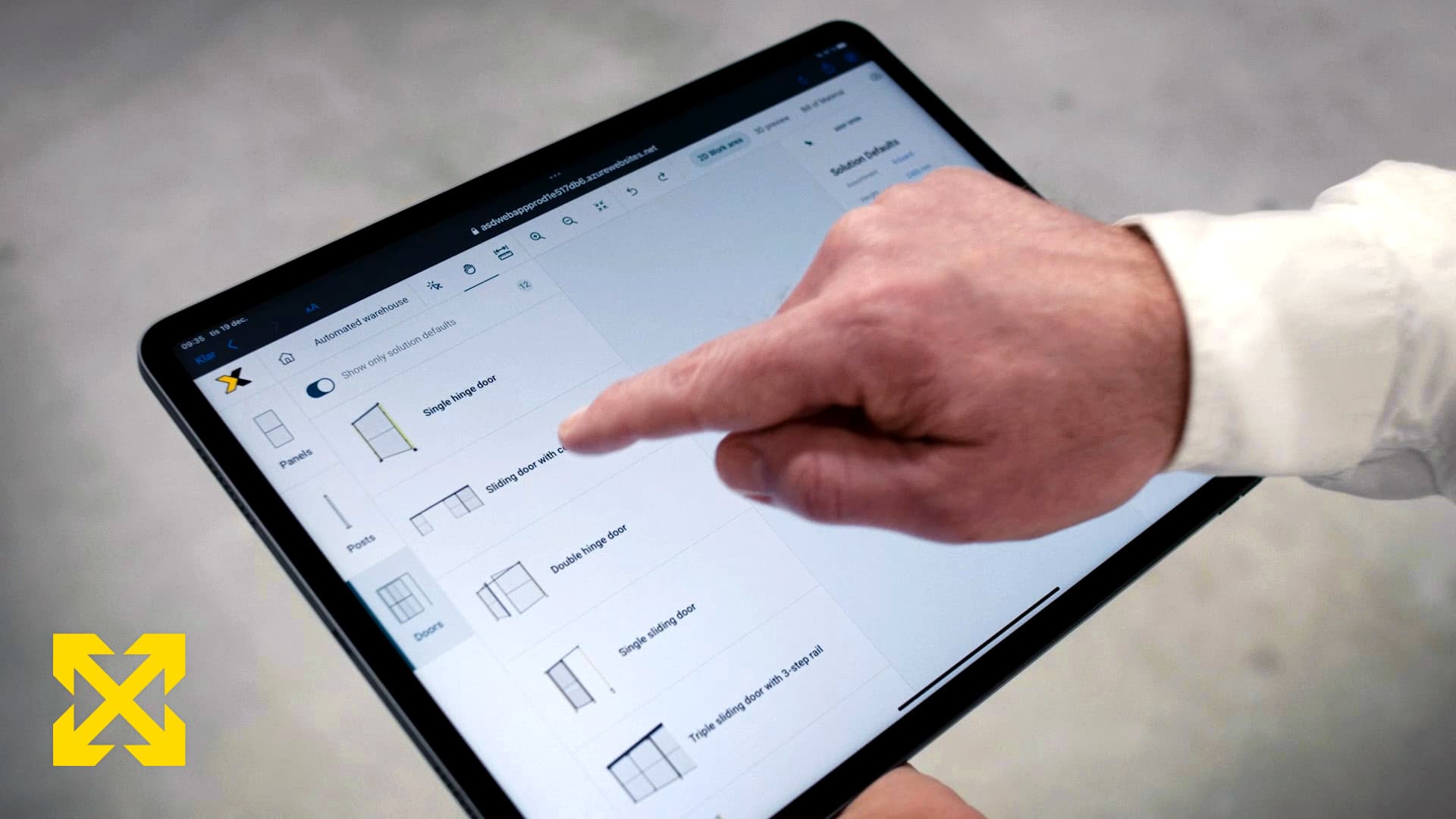
Plan secure zones from the start
When physical separation is included early in the data centreer layout, it becomes easier to plan access, airflow, maintenance and future expansion.
Axelent helps data centreer projects create secure and scalable environments around critical infrastructure.
Related articles

Machinery Directive vs Machinery Regulation: What Changes and What Continues?
Understand the key differences between the Machinery Directive and Machinery Regulation (EU) 2023/1230, including what changes and what remains.

What Machine Manufacturers Need to Know About the Machinery Regulation
From 20 January 2027 the EU Machinery Regulation (EU) 2023/1230 will apply, replacing the current Machinery Directive 2006/42/EC. For machine manufacturers, the change affects several areas of machinery compliance, including risk assessment, technical documentation, cybersecurity and the Declaration of Conformity.

Safety that keeps the flow running in automated cold storage
In Kuurne, Belgium, Coldo operates a highly automated freezer warehouse reaching nearly fifty metres in height. For Ceratec, responsible for delivering the automation solution, the challenge was clear: how to ensure safety, accessibility and maintenance without interrupting the flow. In this customer case, we explore how safe access, zone separation and modular safety solutions make it possible to carry out maintenance without shutting down the system.

How to create a safe warehouse that supports long-term efficiency
A safe warehouse is not only about compliance. It is about preventing the types of incidents that cause injuries, damaged goods and costly downtime, including forklift collisions, falling pallets and structural rack failures. With correct planning, proper dimensioning and the right rack protection systems in place, you can significantly reduce these risks while supporting long-term operational efficiency.

Forklift Accident Statistics & How to Prevent Them
An in depth look at forklift accident statistics in the UK and other countries, before explaining forklift safety tips and what you can do to prevent these accidents from happening.

What Are the Different Types of Machine Guards?
Machine guards are physical barriers designed to protect workers from machinery or industrial processes. This guide will help you determine what type of machine guard is best for every application.