Knowledge
The Importance of Machine Guarding and Safety in Dispatch Enviroments

In the fast-paced world of logistics and warehousing, dispatch areas are the heart of outbound operations. They're the final checkpoint before goods leave the facility, often involving a flurry of activity with people, machinery, and vehicles working side-by-side. Safety must remain a top priority amid this organised chaos, and appropriate machine guarding and impact barriers are crucial.
This blog explores why machine guarding and impact barriers are essential in dispatch environments, how they align with UK legislation, and the best practices for keeping your operations safe, compliant, and efficient.
What Are Dispatch Environments?
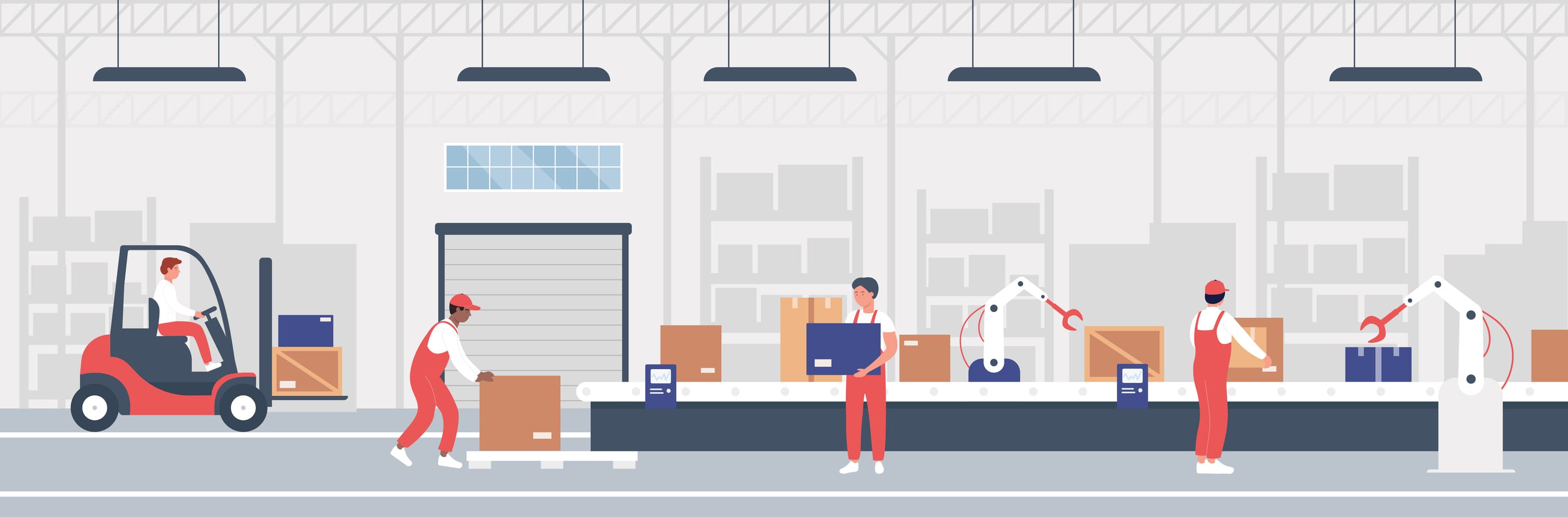
Dispatch areas are high-activity zones within warehouses or distribution centres where goods are sorted, prepared, and shipped. Standard features of these areas include:
- Pallet racking
- Loading transport bays
- Conveyor systems
- Packing stations
- Palletiser and wrapping machines
- Forklifts
- Automated or robotic storage solutions
Given the frequency of human-machine interaction in these spaces, the potential for accidents is significant without proper safeguards.
What are Machine Guards?
Machine guarding refers to the use of fencing, devices, or design features that prevent access to dangerous parts of typically fixed position machinery. It's a first line of defence in protecting workers from:
- Moving parts (gears, belts, rollers)
- Crushing points
- Entanglement risks
- Sharp or heated surfaces
In the UK, machine safety is covered by the Machine Guarding Directive 2006/42/EC and the Provision and Use of Work Equipment Regulations 1998 (PUWER). These regulations require that dangerous parts of equipment be guarded to prevent access during operation.
Discover Axelent's flexible machine guarding system

What are Impact Barriers?
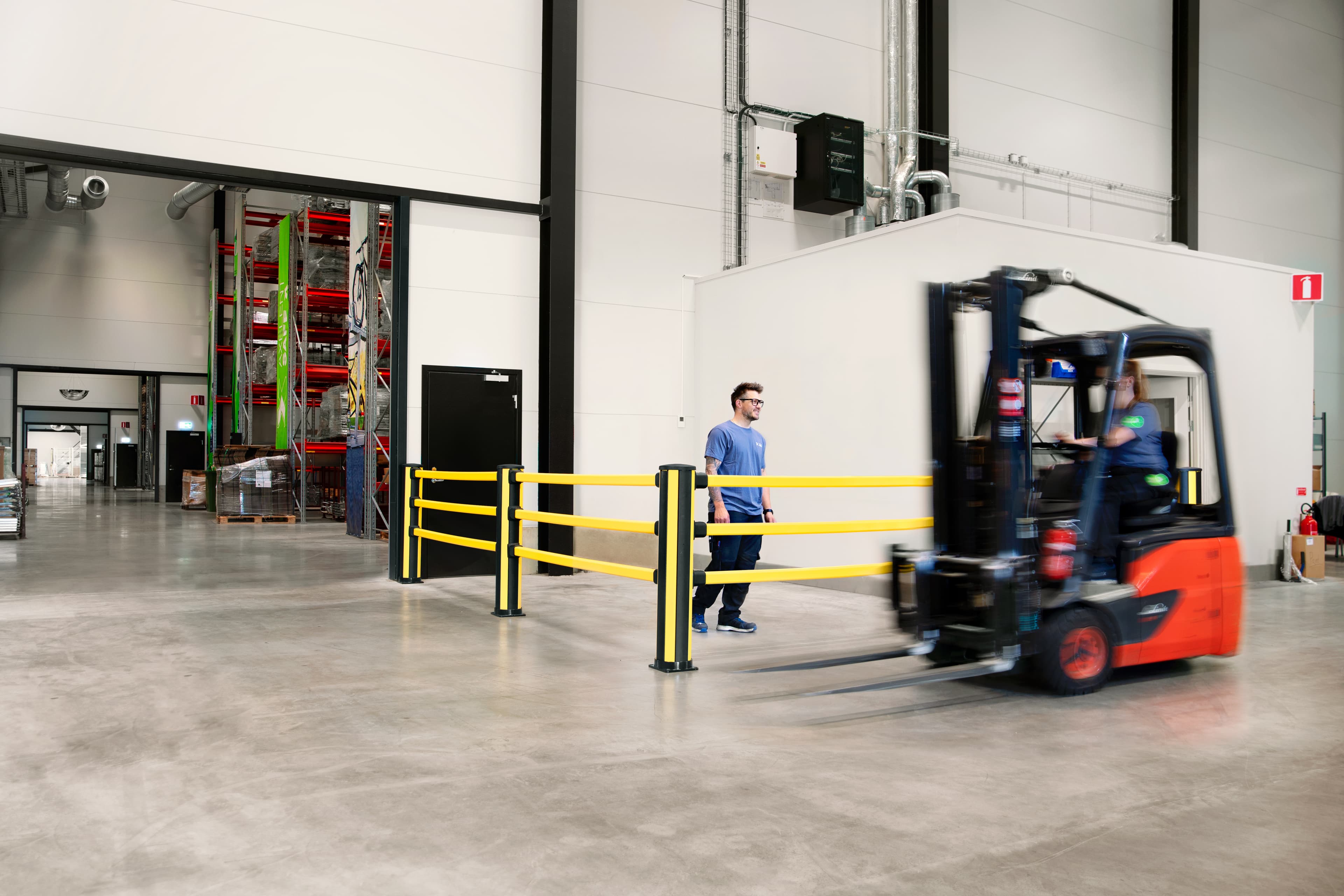
Impact barriers or crash barriers refer to barriers used to prevent or protect people and property from accidental or dynamic collisions between controlled moving machinery. These risks can include;
- Forklifts
- Manual handling equipment
- Lorries and trucks
- Gates and doors
The need for impact barriers alongside machine guarding to prevent downtime and damage to key infrastructure is on the rise. Logistics hubs have increasing looked to automate, integrate, and speed up their dispatches. Just see the rise of next day delivery services as an example.
Axelent's X-Protect range is built with all this in mind.
Dispatch zones are among a warehouse or distribution centre's most dynamic and high-risk areas. They're where goods are finalised, loaded, and sent out, often under tight time constraints. In this pressure cooker environment, the risk of human-machine interaction is exceptionally high, and that's where machine guarding and impact barriers become crucial.
According to the Health and Safety Executive (HSE), injuries involving moving machinery remain a common cause of serious workplace incidents. Effective guarding and barriers prevent harm and demonstrate a commitment to employee well-being.
Here's why it's essential
Machines like conveyors, automated sorting lines, and palletisers can have moving parts that pose risks, such as:
- Pinch points
- Crush zones
- Shear edges
- Entanglement risks (loose clothing or fingers near belts and rollers)
Proper machine guarding prevents direct contact with these danger zones, reducing the risk of serious injury. The Machine Guarding Directive 2006/42/EC details the proper guarding of machinery that poses such risks such as safety distances, allowable gaps, and entry methods to such machines.
Impact protection can be used in combination with guarding to help protect against collisions between traffic and the machine cell. This can prevent costly damage and downtime in high risk or interaction areas.
In dispatch areas, employees and machinery often share the same space. Modular guarding and Impact barrier systems like Axelent's X-Guard or X-Protect can;
- Define walkways from vehicle traffic
- Create levels of physical separation between personnel and active machinery depending on the level of danger.
- Prevent unauthorised access to restricted areas
This simple separation reduces confusion and accidental entry into hazardous zones. It can also offer other benefits such as increased efficiency and traceability of your processes.
Injuries and near-misses result in:
- Operational shutdowns
- Investigations
- HSE reports
- Legal liability
- Bad publicity
Effective use of machine guarding and impact barriers help to avoid unplanned downtime, protect your insurance rating, and improve overall workflow by reducing risk-related disruptions.
In the UK, machine guarding is a legal requirement under PUWER 1998 and supported by broader legislation such as:
Failure to comply can result in enforcement action by the HSE, including fines, prohibition notices, or even prosecution in cases of serious injury.
Guarding also supports adherence to ISO 45001—the international standard for occupational health and safety management.
When workers see that risks are being addressed with physical safety measures, it builds:
- Trust in the company
- Confidence in using equipment
- A more substantial overall health & safety culture
- The feeling of being valued
That's key for retention, morale, and reputation in a sector where skilled staff are hard to keep. It can also even help attract new talent over rivals.
Best Practices for Implementing Safety
Conduct Risk Assessments
Identify all machinery and activities that present a hazard and assess how likely and severe those risks are. Ensure compliance to the correct standards.
Select the Right Protection
Match solutions to the hazard type such as fixed machine guarding for permanent hazards, or impact barriers for dynamic moving risks, or areas of high interaction between people and machines.
Train Staff
Ensure everyone working in or around dispatch areas understands the risks and the purpose of each safety measure introduced.
Inspect and Maintain Reguarly
Set up a schedule for checking guards and barriers for impacts or failures.
We are here to help
If you have questions or need advice on industrial safety solutions, standards, or regulations, don’t hesitate to contact Axelent. Our specialists will support you in creating a safer and more efficient working environment.

Area Sales Manager | East & Midlands

Customer Success Lead
Related articles

Forklift Pedestrian Safety: How to Plan Safer Traffic Flow
Forklift pedestrian safety starts with how traffic is planned inside the facility. A clear warehouse traffic safety plan can support forklift accident prevention by reducing unclear routes, unsafe crossings and mixed movement between people and vehicles. We look at how to plan safer warehouse traffic flow, from speed limits and floor markings to physical barriers and changing traffic patterns.

Pallet Racking Protection: Prevent forklift damage to uprights and aisle ends
Every forklift impact against a rack upright creates damage that spreads beyond the point of contact. One bent upright lead to inspections, repairs, downtime and reduced load-bearing integrity. Repeated impacts shorten the lifespan of the entire racking system. Pallet racking protection reduces that risk by protecting the areas where collisions happen most often: uprights, aisle ends and exposed traffic zones.

Warehouse Barrier Systems: Choose the Right Protection for Every Zone
Every unprotected zone in a warehouse is a problem that hasn't happened yet. This guide helps you choose the right barrier system for each area in your facility, from high-traffic forklift routes to loading docks and pedestrian crossings.

How to build a strong workplace safety culture
A strong safety culture is essential for organisations that want to reduce risk, protect people and support long-term performance. But building a safety culture in the workplace requires more than policies and procedures. It requires leadership, open communication and continuous improvement.

Axelent and ABB: A Partner Every Step of the Way
Safety solutions enabling safe machine operations and forklift traffic in ABB Robotics training facility.

Forklift Accident Statistics & How to Prevent Them
An in depth look at forklift accident statistics in the UK and other countries, before explaining forklift safety tips and what you can do to prevent these accidents from happening.