Impact barriers
Prevent costly damage and improve workplace safety with X-Protect impact barriers. Designed for durability and flexibility, this impact protection system absorbs shocks while keeping pedestrians, infrastructure, and traffic ways secure.
Traditional safety barriers can be expensive to repair and replace, but X-Protect’s modular design allows you to swap out individual components quickly—saving time and money. Whether you need pedestrian barriers, forklift protection, or a strong divider between storage areas, X-Protect is the adaptable solution your workplace needs.
Contact us and we will help you find the optimal solution for your specific situation and environment, or design it yourself with our drawing application Axelent Safety Design.
Impact barriers
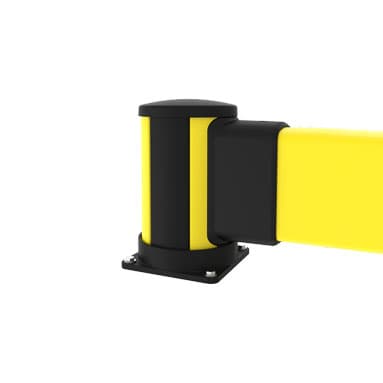
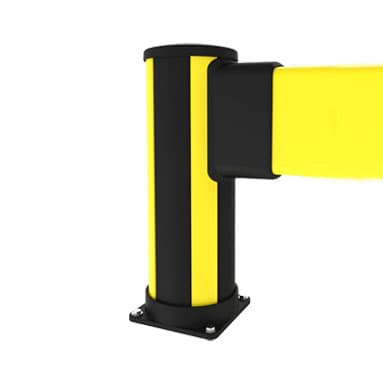
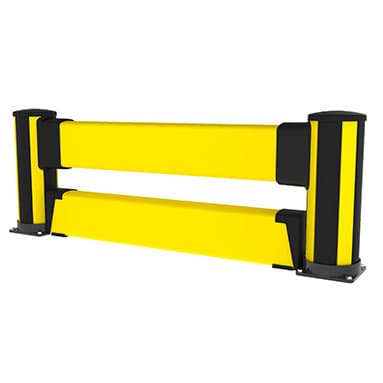
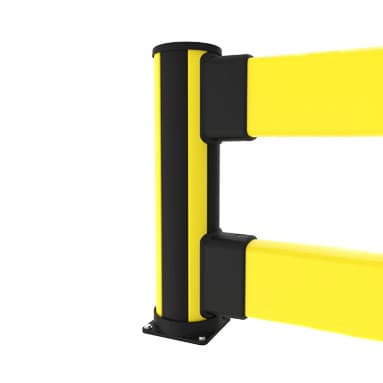
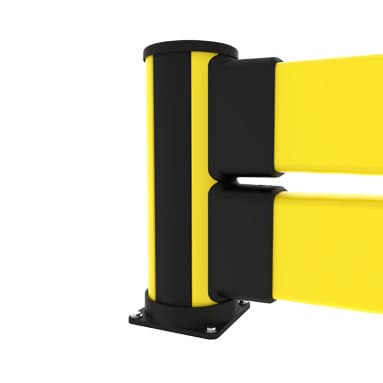
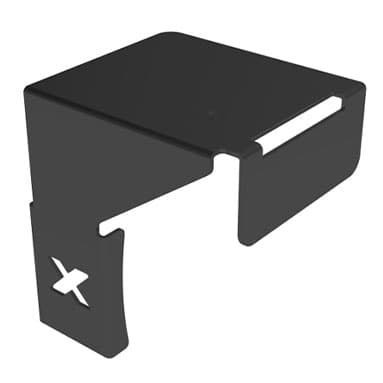
Maximize the safety of your workplace with our versatile guardrail that functions as a ground-level crash barrier and as a divider for different storage areas. Our modular system makes it easy to replace damaged or worn parts at the component level. With just a simple slide on and off, you can easily replace the desired components.
Introducing X-Protect, the unique range of safety barriers that offer unprecedented modularity. With only a few system components and built-in shock absorption, X-Protect adapts to your workplace and changes easily when needed. Repair, replacement and rapid transformation of existing barriers is easy with X-Protect. And best of all, the possibilities for customized configurations are limitless.
Contact us for a quote or if you need assistance with finding the right safety solution for your work environment.
Warehouse Safety Barriers & Guardrails | X-Protect by Axelent
Warehouses run on constant movement. Vehicles and employees share the same aisles, docks, and walkways throughout every shift, which is exactly why warehouse safety solutions and barriers matter so much to how a facility operates day to day.
At Axelent, protecting people has been our mission since 1990. Every barrier we design starts from a simple idea: safety shouldn't slow your operation down or come at the cost of flexibility. Our solutions are built in Hillerstorp, Sweden, engineered to install easily, hold up under real impact, and adapt as your facility changes over time, so more people get home safe at the end of every shift. Instead of a single fixed product, we offer a connected system built to grow alongside your operation.
Which Barrier Is Right for Your Facility?
Here's a quick breakdown of the main options:
- Impact barriers sit at ground level and suit areas with light to medium vehicle traffic, ideal for segregating lighter vehicles and defining clear travel routes.
- Impact high barriers extend protection above standard rail height, built for equipment or vehicles that may strike higher off the ground.
Double impact barriers protect structures from high-level, heavy-duty impacts and are one of our strongest configurations for critical infrastructure.
- Double impact low barriers take the same heavy-duty protection down to ground level, making them especially well-suited to safeguarding pallet racking.
- Floor barriers offer a low-profile option for building perimeters, machinery, and equipment that need ground-level protection without a tall footprint getting in the way of workflow.
- Pedestrian barriers are guardrails built to separate people from vehicle paths and create defined walkways through the facility. They're among the most important tools for reducing injury risk in shared spaces.
- Bollards protect the smaller, high-traffic touchpoints. These round posts guard doorways, corners, and equipment, and their black-and-yellow design doubles as visual guidance for drivers navigating tight spaces.
- Column guards shield building columns and racking uprights, two of the most commonly damaged points in any warehouse, from forklift impacts.
Where These Barriers Are Used
Warehouse safety barriers earn their keep in any space where people, racking, or heavy vehicles share a footprint. Common applications include:
- Racking aisles and pallet storage, where impact and column protection help prevent damage to upright columns
- Loading docks and staging areas, where heavy vehicles move quickly in tight quarters
- Pedestrian walkways and crossing points, where clearance for vehicles and foot traffic needs to stay separated
- Automated Mobile Robot (AMR) and Automated Guided Vehicle (AGV) routes, where defined lanes keep automation and people apart
- Column and machine protection zones, where a single impact can take equipment offline
- Warehouses and distribution centers with active forklift and reach truck traffic
- Manufacturing facilities where vehicles and pedestrians operate in shared zones
- Any facility working toward OSHA compliance for pedestrian and vehicle separation
- Perimeter and cold storage areas, where ground-level floor barriers protect racks and walls from repeated contact
Why X-Protect
Safety shouldn't slow you down or cost more than it has to. Here's what the X-Protect barrier looks like in practice.
- Modular by design. Individual components can be replaced at the part level after an impact, instead of swapping out an entire barrier section. That means faster repairs and lower long-term maintenance costs than traditional fixed guardrail systems, one of the reasons our customers find the system more economical over its lifetime, not just at installation.
- Built-in shock absorption. Barriers are engineered to absorb and distribute collision forces, reducing structural damage to floors, columns, and racking when impacts occur.
- Floor-friendly anchoring. The anchoring system is designed to protect concrete floors during installation and impact, avoiding the deep fixings and floor damage common with traditional barrier systems.
- Configurable to your layout. Barriers integrate with Axelent's broader safety system, including pedestrian barriers, bollards, column guards, and machine guarding, so your entire facility can work from a single, consistent safety framework.
- Compliance support. Our safety barriers are designed to help facilities meet current safety expectations and evolving OSHA and ANSI guidance. Every configuration is impact-tested at our own facility using a weighted forklift replica to simulate real-world impacts.
- Fast, simple installation. Components slide together with minimal tools, so crews can install or reconfigure barriers without specialized labor.
- Built with the planet in mind. Each part uses a single type of recyclable plastic, so worn or damaged components can be replaced individually and recycled at the end of their life. It's part of Axelent's broader commitment to sustainable manufacturing.
Get X-Protect Today
If you're not sure which combination of barriers fits your warehouse layout, that's a normal starting point. Our team can walk through your floor plan, identify where heavy vehicles and pedestrians cross paths, and recommend a layout built around your facility's real traffic patterns, not a generic template.
Contact us for a quote today, and we'll help you map out a safety plan that fits how your warehouse actually runs.
FAQ Section
What are warehouse safety barriers used for?
Warehouse safety barriers are physical guardrails installed to separate vehicle traffic from pedestrians, protect infrastructure like columns and racking, and define safe zones within a facility. They're a standard part of warehouse safety planning and support OSHA's requirements for keeping pedestrian and vehicle areas separated
Can the X-Protect barriers be reconfigured after installation?
Yes. The system is designed to adapt over time, so you can add, remove, or reconfigure sections as your facility layout changes, without the cost of a full reinstallation.
How are X-Protect barriers installed?
Barriers anchor to the floor using a system designed to minimize floor damage, and components slide together with minimal tools for fast installation.
Do X-Protect barriers help with OSHA compliance?
OSHA guidance calls for clear separation between vehicle traffic and pedestrian areas in warehouses and industrial facilities, and physical guardrails are one of the primary ways facilities achieve that. We design our barriers to support these requirements with a durable, clearly visible solution, though we'd always recommend confirming specifics with your safety compliance advisor for your facility's requirements.